
Early Years
EYFS Rationale
Intent
In the Early Years at Bilton Grange Primary School, children learn within a safe and secure learning environment that equips them with the cultural capital for their educational journey ahead.
We ensure children are given a range of highly-engaging and enjoyable play-based learning experiences which enable them to become confident and independent learners.
We endeavour to offer a curriculum that is based on real life experiences, involves the child and most importantly is planned through careful assessment of their needs and interests.
Implementation
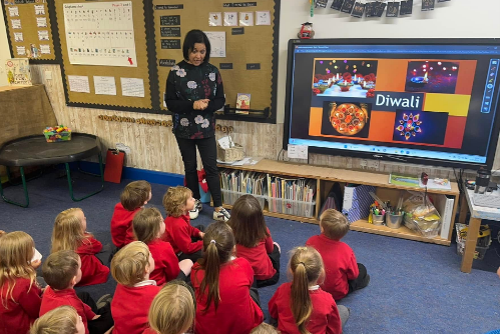
Early Years curriculum and learning is planned through exciting topics, led by a ‘wow’ starter. The four aspects of British Values; democracy, the rule of law, individual liberty and respect are threaded throughout our topics.
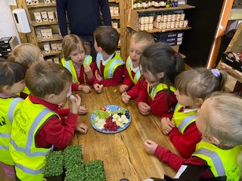
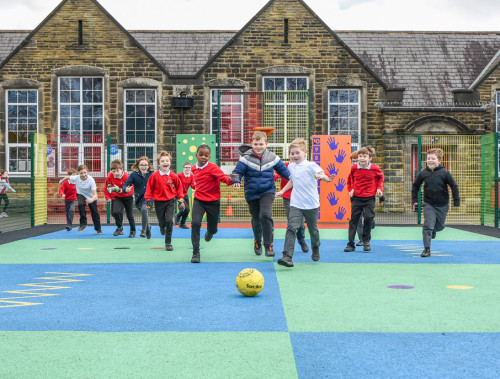
Children receive a balance of adult focused, adult initiated and child led activities, which are adapted throughout the year as they transition into Year 1. Throughout the day the children have the opportunity to learn outside and across both classroom environments.
An Enabling Environment
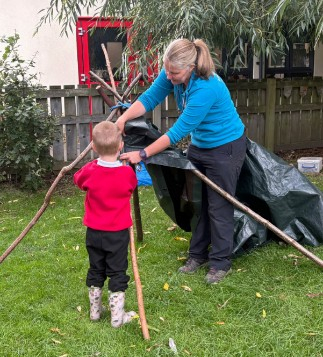
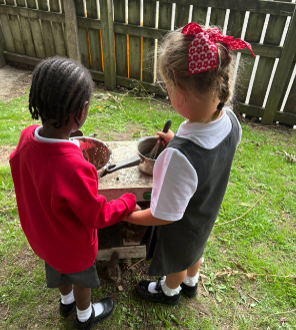
We offer an environment that supports children’s independence both indoors and outside. Areas of learning are clearly defined and provide a wide range of resources that are varied, open-ended and of a high quality. This gives children the opportunity to select resources to support their chosen activity. Each week specific areas of the environment are enhanced, and children are set challenges. They are able to hear these challenges through talk buttons and key vocabulary is clearly displayed to enable adults to further support and challenge the children.
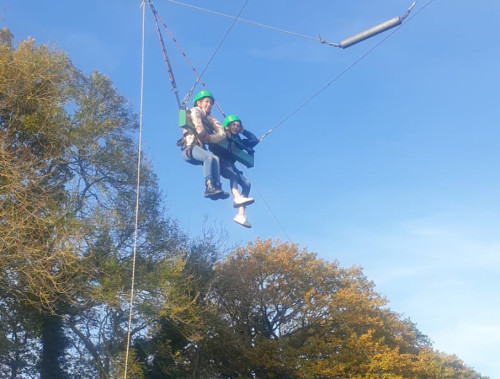
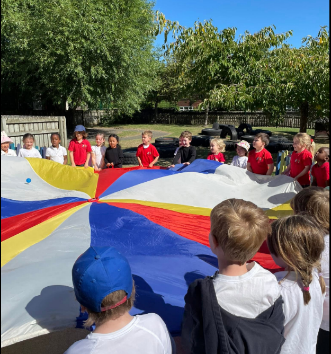
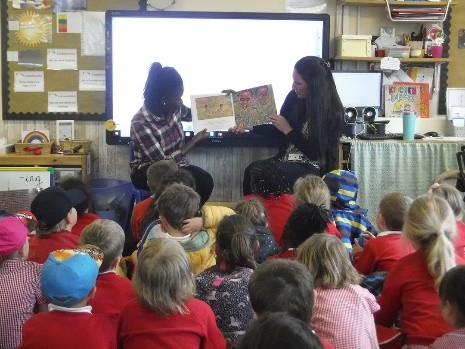
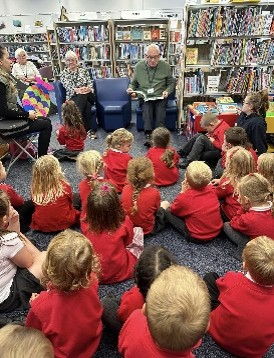
Enhancements within our curriculum—such as Forest Schools, Bikeability, and a range of visits out of school as well as visitors into school—provide children with rich experiences that foster personal growth, resilience, and a deeper connection to the world around them. The Forest Schools approach, offers children regular opportunities to achieve and develop confidence through hands-on learning in our outdoor environment. This approach encourages independence, teamwork, and problem-solving skills, all while promoting a respect for nature and the environment.
Quality Interactions
Adults build valuable and trusting relationships through adult focused activities, observing and interacting with the children in the learning environment. Our adults know the children very well and have a sound understanding of child development. As well as provision enhancements, the children have the opportunity to initiate their own learning and the adults support them to extend the learning opportunities. Children who require more support in this area receive 1:1 time and small group times led by an adult.
Impact
Progress, Development and Assessment
Children are assessed weekly in Maths, Reading and Writing through small group work, whole-class carpet times and whilst learning independently in the learning environment. In team meetings progress is shared and the next steps of learning discussed. Children’s independent learning is observed and recorded in a class floorbook. Each term there is a focus in the areas of Expressive Arts and Design and Understanding of the World. Each child participates to ensure they are practising and developing vital skills.
Parental Involvement
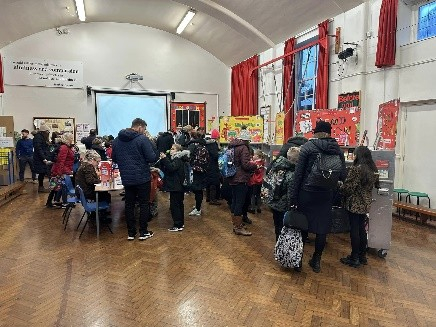
We believe that all parents and carers have an important role to play in their child's education. We recognise and value the contribution that families make to children's learning and development, both now and in the future. In Reception, parents are encouraged to support their child's learning at home through sharing books, engaging in simple home learning activities and attending workshops and events throughout the year. We value the importance of the strong partnership between children, parents and staff, as this helps children to make good progress and achieve their full potential. Staff are available before and after school to share information and discuss any questions or concerns, and parents can also communicate with school through the agreed communication channels. Formal parent consultation meetings are offered in the Autumn and Spring terms, providing an opportunity to discuss children's progress and development, identify next steps in learning and view examples of their work.
Inclusion
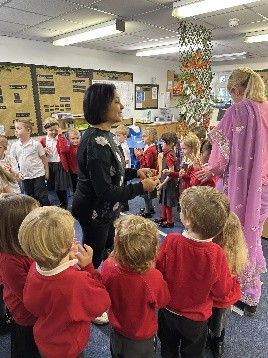
Our whole school ethos, as well as that of the Early Years, embraces inclusion. We recognise and respect the abilities and strengths of our children at all levels of development and the wealth of knowledge and experience that they bring from their differing backgrounds and cultures. We give our children every opportunity to achieve their best. We do this by taking account of our children’s range of life experiences when planning for their learning and we set realistic and challenging expectations that meet the needs of individual children, so that children are able to reach their full potential. We achieve this by planning to meet the needs of all children, including children with special educational needs, children who are more able, children from all social and cultural backgrounds, and children of different ethnic groups. We monitor children’s progress and take action to provide support as necessary. Where a specific need is identified we will liaise with the Special Educational Needs Co-Ordinator and seek advice from outside agencies, such as the speech and language service.
Early Years Pupil Premium
We endeavour to identify our disadvantaged pupils and inform parents or carers of their opportunity to apply for their child’s entitlement to extra funding in school. All extra funding, we receive is used to support areas in which we identify that the child will best benefit. We track children’s progress to ensure that they are making good progress and to ensure that support is adjusted to target specific areas as the child develops.
Transition
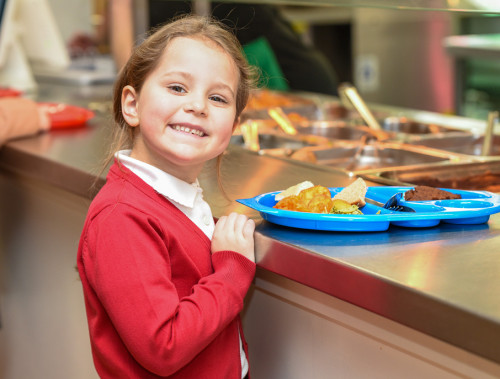
Ensuring a smooth transition from nursery settings into EYFS and from EYFS into KS1 is a key priority. Reception teachers endeavour to visit or speak to each child’s key person from their nursery setting to discuss their development, attainment and progress. Children are then invited in for two stay and play sessions and a parent’s meeting which provides information about routines and the curriculum. On the second stay and play session parents are encouraged to join their child to have lunch in our school canteen.
Safeguarding and Welfare Procedures
Children learn best when they are healthy, safe and secure, when their individual needs are met, and when they have positive relationships with the adults caring for them. At Bilton Grange, we promote good oral health, as well as good health in general, in the early years through discussions on healthy eating, the importance of brushing your teeth and the effects of eating too many sweet things. The rest of our safeguarding and welfare procedures are outlined in our safeguarding policy.